

-
About usHarbin Dong’an Lifeng Cutter Co., Ltd., is an enterprise with a history of more than sixty years, specializes in the design and manufacturing of customized cutters. We design, manufacture and grind customized cutters for aero engines, automotive engines, steam turbine industry, provide the overall solutions of cutting technology for customer demand.

-
ProductMain products:Cutting tools for hardworking material of aero engine,gear cutting tools of small modules(shaper cutter,hob)for helicopter decelerator, combined disc milling cutter for the fork-shaped blade,molded line milling cutter for the turbine rotor (blade),etc.


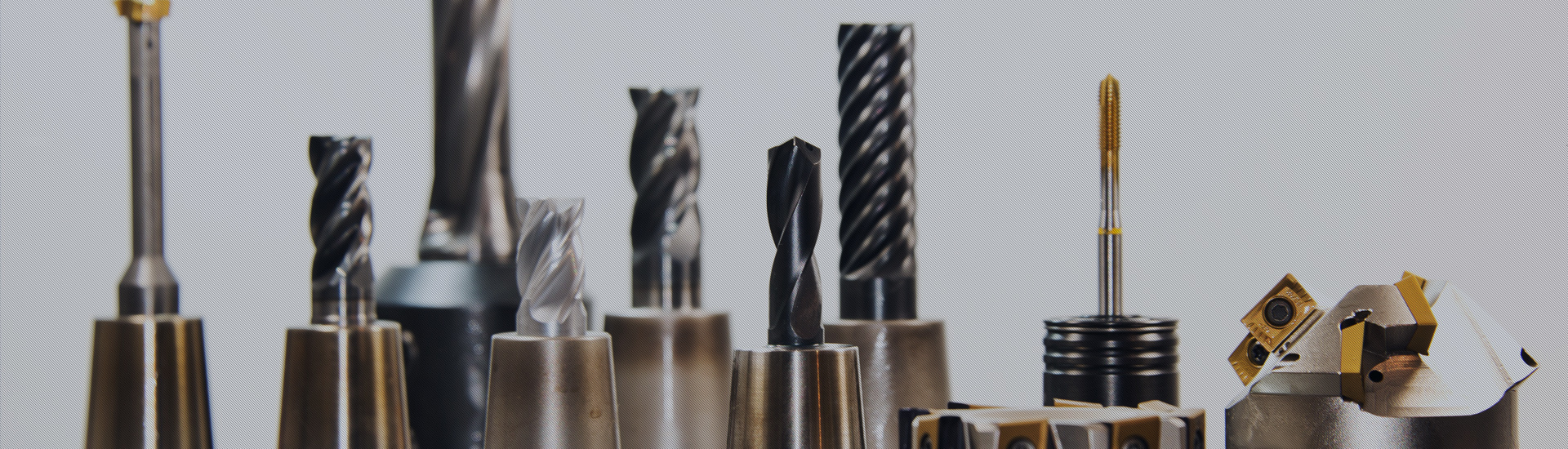
Basic properties of tool materials
The material of the tool must have high high temperature hardness and wear resistance, the necessary bending strength, impact toughness and chemical inertness, good process (cutting, forging and heat treatment, etc.), and not easy to deform. Usually when the material hardness is high, the wear resistance is also high; the bending strength is high, the impact toughness is also high. However, the higher the hardness of the material, the lower the flexural strength and impact toughness.
25
Oct 25,2024
26
Sep 26,2024
Common Symbols and Meaning in Mechanical Drawings
Common Symbols and Meaning in Mechanical Drawings
12
Sep 12,2024
Turning tool chip breaking groove form
The angle between the sides of the chip breaker and the main cutting edge is the chip breaker bevel. The commonly used chip breaker bevel angle has the outer oblique type, the parallel type and the inner oblique type.
21
Aug 21,2024
Mechanism of Cemented Carbide Brazing Crack and Preventive Measures
1. Cracks caused by thermal stress The main cause of cracking of cemented carbide induced by thermal stress is that the brazing heating speed is too fast or the brazing is cold. Brazing processes such as flame brazing, resistance brazing and high-frequency induction welding can easily lead to rapid heating and excessive heating of brazing. Oxygen acetylene flame heating, the flame of the high temperature zone up to 3000 ℃, when the flame directly burning hard alloy, so that the surface of the hard alloy or local heating too fast, and sometimes even the corners of the hard alloy part of the burning, hard alloy size will trigger cracks. In the case of resistance brazing, since the electrode directly contacts the cemented carbide, the cemented carbide is easily overheated and cracks are caused. During high frequency brazing, the sharp effect, skin effect and circumferential effect of induced current lead to the local heating of cemented carbide too fast and too high to produce cracks. There are several situations in which cracks are caused by cold after brazing: after brazing, the tool is placed on a wet ground or in a wet lime tank. After brazing, the tool is blown by cold air; After brazing, the tool needs to be quenched and cold. In general, for YT30, YT15 and large-area brazed carbide tools, it is not suitable for overall quenching after brazing to avoid cracks. 2. Cracks caused by differences in mechanical properties For YT60, YT30, YW2, YG2, YG3x and other grades of cemented carbide, due to poor impact toughness, cracks are likely to occur during brazing. For cemented carbide with larger geometry, cracks are more likely to occur during brazing due to stress accumulation. Cemented carbide itself in the sintering process of defects, such as internal cracks, collapse angle, porosity, etc., after heating brazing will expand and form large cracks. In general, the cemented carbide must be strictly inspected batch by batch before brazing. Cemented carbide with poor impact toughness should be slowly heated and slowly cooled. 3. Cracks caused by pre-and post-treatment The pre-weld treatment of cemented carbide is generally sandblasting or mechanical grinding, rather than pickling. If pickling is used, the acid will corrode the grain boundaries of the cemented carbide, reduce the mechanical properties of the cemented carbide, and initiate cracks. Cracking of cemented carbide tools after brazing due to sharpening accounts for a large proportion. When sharpening, the improper selection of the grinding wheel used (such as grinding wheel material, hardness and particle size, etc.) will crack; the carbide tool is equivalent to the high-speed steel knife, and the grinding is also immersed in water, and the crack will occur. If the grinding allowance is too large, cracks will easily occur during grinding. A strong continuous grinding tool is easy to grind out cracks in hard alloy. When a group of tools are sharpened, rotation or running water sharpening method should be adopted. When sharpening, a group of tools can be sharpened by rotation or a group of molds can be used for rough grinding, fine grinding and fine grinding respectively. This process can not only improve production efficiency, but also greatly reduce the occurrence of cracks. 4. Measures to prevent brazing cracks The causes of cracks are complex, in addition to the above introduction from the structural design, heating system and welding after treatment to reduce the cracks, there are some effective process measures in engineering practice has been well applied. In single-piece and small batch production, the process method of adding compensation to the brazing seam is often used. The method of adding a compensation gasket to the brazing seam is to place a compensation such as a metal wire mesh, a metal punching gasket or a metal wire between the cemented carbide and the substrate before the brazing of the alloy. Since the melting point of these high plasticity compensators is higher than the brazing temperature, they do not melt during the brazing process and are embedded in the middle of the weld. In the process of post-weld cooling, the compensation undergoes elastic-plastic deformation, and the hard alloy and the base metal can shrink more freely, which effectively reduces the brazing thermal stress of the hard alloy and the base, thereby preventing the occurrence of cracks. In the use of compensation brazing, brazing residue is not easy to exclude, the operation needs to pay special attention to the dislocation of hard alloy to facilitate the slag. The method of adding compensation during brazing is more complicated, especially the operation of eliminating welding slag is difficult to master and is not suitable for mass production. In mass production, the use of sandwich composite solder is an effective method. The middle layer of sandwich composite solder is composed of copper-nickel or copper-manganese alloy with good elastic plasticity and high strength, and the two sides are composed of comprehensive table/EAAAHHT. When brazing with composite metal, the intermediate layer of the brazing filler metal is equivalent to the compensation gasket. The intermediate layer of the composite brazing filler metal can effectively reduce the brazing stress and prevent cracks as well as the addition of compensation. More importantly, the composite sheet can greatly improve the working efficiency and brazing quality. The key to crack prevention is to reduce the difference between the linear expansion coefficient of cemented carbide and the substrate, and the use of Kovar alloy or high-speed steel as the substrate or gasket can fundamentally reduce the brazing thermal stress and prevent cracks. On the one hand, the expansion coefficient of high-speed steel or Kovar alloy and cemented carbide is small, which reduces the thermal stress; on the other hand, high-speed steel has a higher hardness and yield ratio, which increases the rigidity of the tool and can improve the tool life. In addition, the Kovar alloy as the matrix can effectively prevent the carbide from cobalt removal, can also prevent the carbide crack, and can improve the service life of the tool. For hard and brittle alloys such as YT30, YT60, YW2, YG3X, etc., a brazing method of a double-layer cemented carbide sheet can be used to prevent cracks. This process is simple and easy, is the high strength of the YT8 cemented carbide as a gasket and the substrate welded together, and hard and brittle cemented carbide and then welded on top of it. The advantage of this brazing method is that the pin welding should be concentrated on the high-strength hard metal as a gasket, and the hard, brittle and easy to crack hard alloy above is welded together with YT8, and their linear expansion coefficient is relatively close, so the stress after welding is small and the crack tendency is small. In addition, because there are two layers of cemented carbide welded together, the compressive strength of the whole cemented carbide is improved, thus increasing the service life of the tool. The splicing method. In order to reduce the brazing stress and prevent the occurrence of cracks, double-layer hard alloy brazing can be used, and the following layer is made of small pieces of hard alloy. This method is effective for eliminating large-size alloy cracks and can increase the service life of the workpiece. Local brazing is used to prevent cracks. When the carbide tool with large brazing area does not require high brazing strength, the brazing area of the carbide should be reduced as much as possible. For example, the carbide measuring platform and supporting surface on some measuring instruments do not require any special materials. The brazing process is the same as that of general workpieces, but the purpose of preventing cracks can be achieved by reducing the brazing area. In summary, the purpose of each measure is to minimize the stress caused by the difference in linear expansion coefficient, prevent cracks, and extend the service life of the tool.
15
Aug 15,2024
Service Hotline
Contact Us
Address: No.8, Donghai Road, Harbin Development Zone, Harbin City
Telephone:86-451-86818743
Fax:86-451-86545528
Mailbox:dalf@dalf.cn / dalf_tools@vip.163.com
Technical Department:jishubu@dalf.cn
Sales Department:kaifabu@dalf.cn
Copyright©2024 Harbin Dong’an Lifeng Cutter Co., Ltd.
Powered by:www.300.cn | Business License | Seo | City substation